About Us
Company Overview
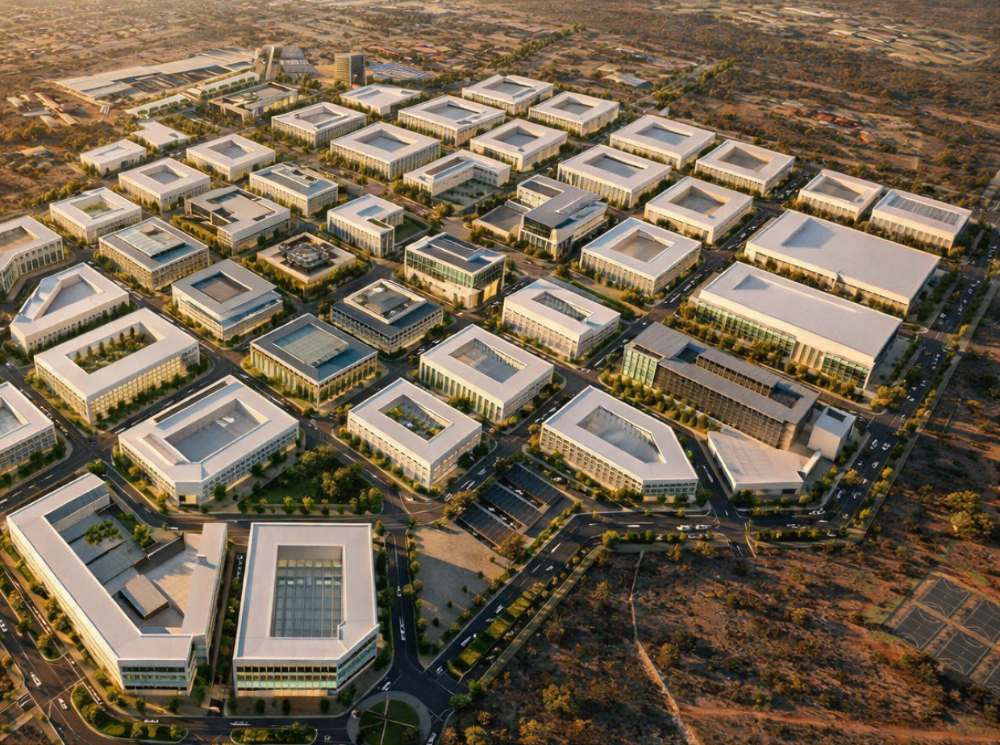
Ubuntu Urban Designers is a multidisciplinary urban design led practice established by Tahira Toffah, Clive Tsimba and Itumeleng Mogola. The practice is founded on a shared commitment to shaping inclusive, resilient and well-designed African cities, towns and settlements. Ubuntu Urban Designers operates at the intersection of urban design, architecture, landscape architecture and urban planning, allowing the practice to respond holistically to complex spatial, social and environmental challenges.
The studio is structured to function as a flexible, project- driven vehicle capable of delivering new towns, urban nodes, precincts and strategic frameworks, particularly within rapidly transforming contexts such as Limpopo Province and other growth regions across South Africa. Ubuntu Urban Designers collaborates with an expandable network of specialists, ensuring scalability and responsiveness across projects of varying size and complexity.
Vision
To contribute meaningfully to the transformation of South African and African cities by creating human-centred, contextually grounded and future-ready urban environments that enable dignity, opportunity and belonging.
Mission
Ubuntu Urban Designers seeks to:
• Deliver urban design–led solutions that integrate spatial justice, environmental resilience and economic viability.
• Support public and private sector partners in the planning and design of new towns, urban nodes and regeneration projects.
• Champion a people-first approach, where everyday lived experience, culture and identity inform spatial outcomes.
• Contribute to the evolution of post-apartheid urbanism through design excellence, critical thinking and ethical practice.
Philosophical Grounding
The practice is grounded in the belief that South African cities and towns require place-specific, socially responsive and implementable design solutions. Ubuntu Urban Designers recognises that the legacy of spatial inequality continues to shape access, mobility, land use and economic opportunity.
Our work is guided by the spirit of ubuntu — an understanding that cities are collective constructs shaped by relationships between people, place and environment. This philosophy informs our participatory processes, collaborative working methods and commitment to inclusive outcomes.
Ubuntu Urban Designers approaches urbanism as both a technical and human endeavour, where spatial frameworks must be legible, adaptable and capable of improving daily life. The practice is sensitive to:
• Informality and hybrid urban conditions
• Climate and environmental constraints
• Cultural landscapes and indigenous knowledge systems
• Governance realities and implementation capacity
Why Ubuntu?
South African cities and towns are not neutral constructs. They are the product of layered histories, political decisions and economic systems that have left enduring spatial, social and psychological scars. Forced removals, segregation, exclusionary planning and infrastructural
neglect have shaped environments that often continue to reproduce inequality, dislocation and trauma in everyday life.
Ubuntu Urban Designers is founded on the belief that urban design and planning have a critical role to play in healing these conditions. Ubuntu - “I am because we are” - speaks to interdependence, dignity and shared humanity. For us, it is not a slogan, but a guiding ethic that shapes how we think, design and engage.
We understand cities as lived spaces before they are diagrams or plans. Streets, squares, neighbourhoods and landscapes carry memory, identity and meaning. When these spaces are poorly designed or disconnected from human experience, they reinforce alienation. When they
are thoughtfully planned, they can foster belonging, safety, opportunity and pride.
Ubuntu Urban Designers approaches urbanism with an acute awareness of the traumatic epochs that have shaped South African space, and with a responsibility to do better. Our work seeks to transform space into place by centring people - their daily routines, cultural practices, economic realities and aspirations - within robust spatial frameworks.
Through collaborative processes, interdisciplinary thinking and context-sensitive design, we aim to contribute to cities and towns that are not only efficient and resilient, but also restorative, inclusive and humane. In this way, ubuntu becomes spatially expressed - in streets that invite life, public spaces that support gathering, and urban systems that work for everyone.